PLANNING PADEL COURTS: A PRACTICAL UK PROJECT GUIDE
Plan a UK padel court project with clearer questions on land, planning consent, neighbours, foundations, lighting, budgets and long-term operation.
11 MIN READ · Padel Clubs UK editorial
Related reading: support for clubs and landowners and what new players look for. For official guidance see the LTA padel hub.
DEFINE THE PROJECT BEFORE CHOOSING A COURT
Planning padel courts starts with a purpose, not a supplier's colour chart. A private garden court, a members' club and a commercial pay-and-play venue have different users, opening patterns and financial pressures. Write down who the court is for, when it should operate and what a successful year would look like. That brief will guide the site, professional appointments and realistic budget.
This guide is for early decisions in the UK. It is not planning, engineering, legal or investment advice. Requirements differ across England, Scotland, Wales and Northern Ireland, and local circumstances can change the answer. A qualified planning adviser, structural engineer and solicitor should address the matters within their expertise. Never place a construction order on the strength of a general article.
The LTA's 2025 court construction guidance provides a useful technical framework. It explains that a court is a structure with site-specific foundations, drainage and wind-loading requirements. It also sets out a staged approach from business planning to tendering and handover. Read the current version and ask your professional team which standards and approvals apply to your proposal.
CHECK CONTROL OF THE LAND AND THE WHOLE SITE
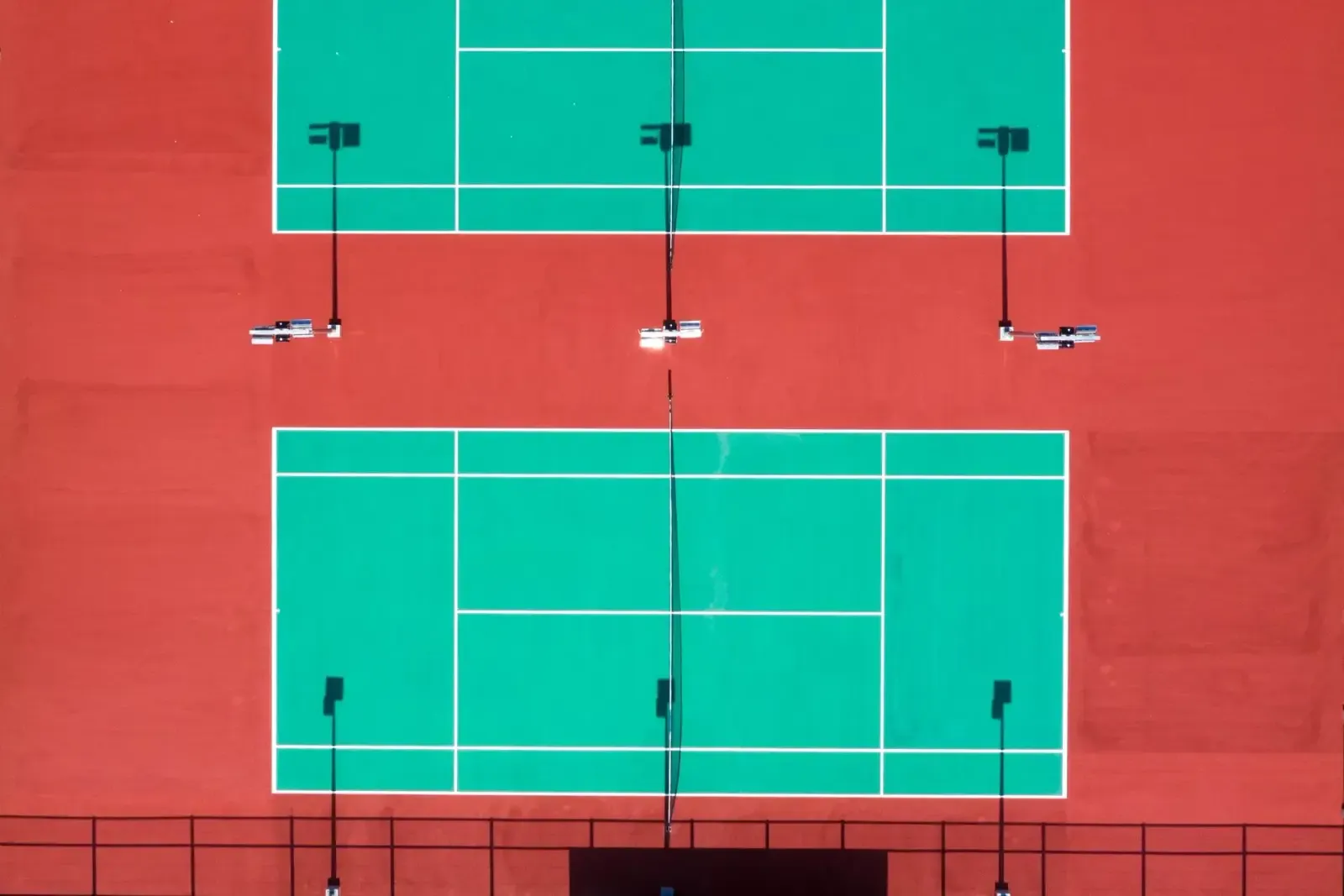
A standard doubles playing area is 20 metres by 10 metres, but a viable site needs more than that rectangle. Access, circulation, maintenance, inclusive routes and any facilities must fit safely around it. Elite competition can have further out-of-court requirements. Ask for a measured site layout rather than relying on an attractive aerial image or an approximate online measurement.
Confirm ownership, lease length, rights of access, covenants and any restrictions on development or commercial use. A landlord's verbal enthusiasm is not the same as written permission to build. A funder may require a particular period of secure tenure, while a lender may have requirements about security. Let your solicitor check those points before substantial design expenditure.
Look beyond the boundary as well. Nearby homes, trees, flood risk, drainage routes and the capacity of the local road network can affect the scheme. Find out whether underground services cross the proposed foundations. A site that looks flat and empty can still carry constraints. Early investigations are a way to reduce uncertainty, not an unnecessary delay.
TREAT PLANNING CONSENT AS A FIRST-STAGE QUESTION
The LTA construction note states that constructing a padel court requires formal planning consent from the relevant local authority. Ask that authority or a qualified adviser how your exact proposal should be handled. Existing sports use does not automatically settle the enclosure, lighting, canopy, hours or associated works. Do not rely on another club's permission as proof that your site will be approved.
A planning submission may need drawings and specialist evidence about matters such as noise, lighting, traffic, ecology and drainage. The extent depends on the location and proposal. Your adviser should explain which reports are proportionate and when to commission them. Pre-application discussions can help identify concerns, but they are not a promise that consent will follow.
Planning is not the only approval question. Building-control requirements, access, fire safety, highways matters and protected sites or buildings may require separate attention. Ask your team to create an approvals schedule showing the decision maker, supporting information, likely sequence and responsible person. A single list makes omissions easier to spot before work begins.
ADDRESS NOISE AND NEIGHBOURS WITH EVIDENCE
Padel has a distinctive sound because balls strike rackets and enclosure surfaces. Voices, arrivals, departures and evening activity can also matter. Consider the whole operating pattern rather than only the noise of a demonstration rally. A qualified acoustic consultant can assess the site and advise on layout, design, mitigation and appropriate operating conditions.
The LTA's 2025 note highlights nearby residential property, including locations within 50 metres, as a reason specialist noise and light surveys are likely to be needed. That is guidance, not a universal safe-distance rule. Being further away does not prove an impact is acceptable, and a planning decision can depend on the local context and evidence.
Speak to neighbours early and describe the actual proposal honestly. Show the likely hours, access arrangements and contact route for concerns. Do not promise silence, guaranteed approval or an operating limit you do not intend to keep. Record the questions raised and ask your professionals to address them. Good communication helps, but it does not replace a sound assessment.
DESIGN FOUNDATIONS AND DRAINAGE FOR THIS LOCATION
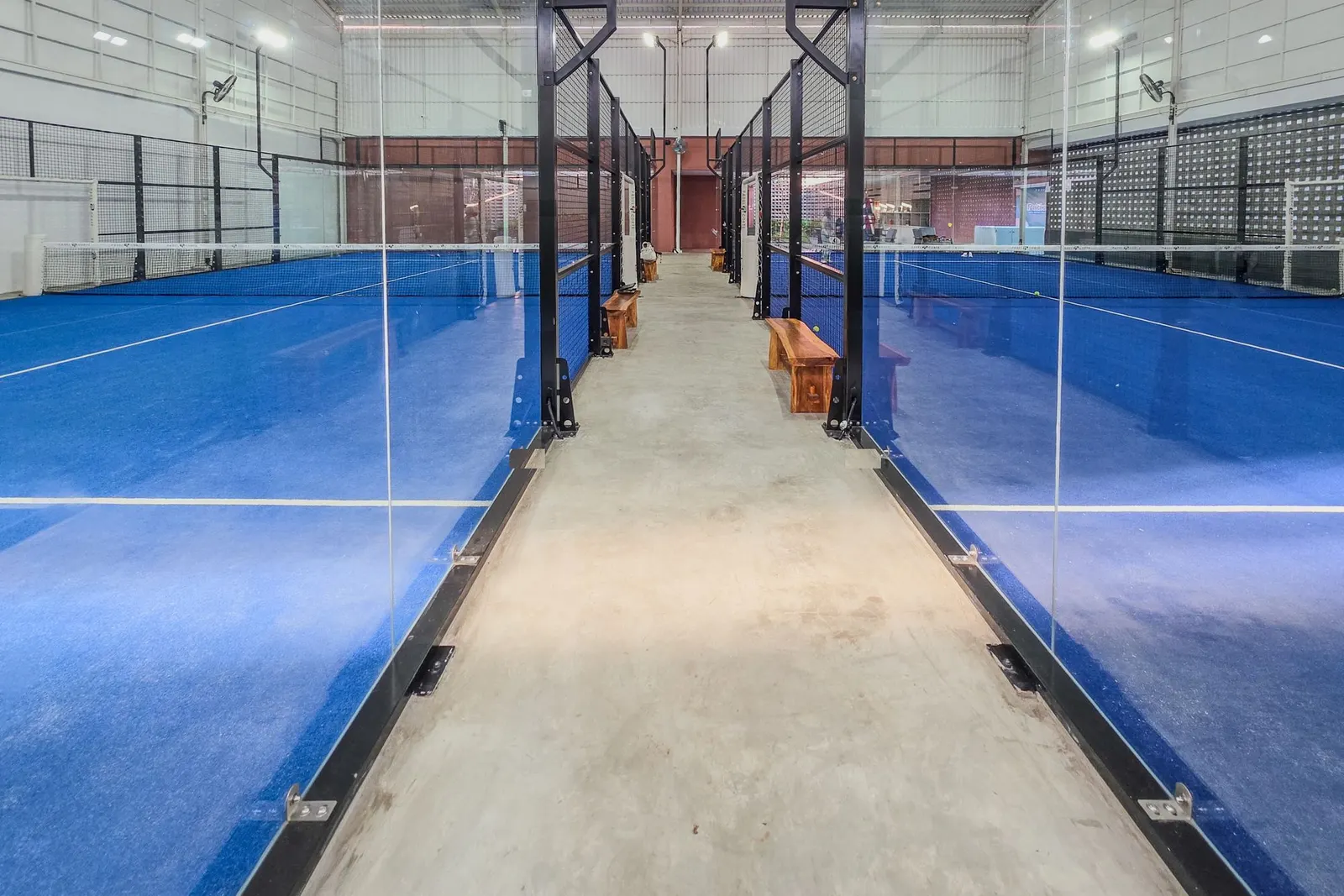
A padel enclosure is not simply furniture sitting on a sports surface. Glass panels and supporting steelwork carry loads, and exposed locations can produce significant wind demands. The LTA recommends engaging a UK-qualified structural engineer early to design site-specific foundations and drainage. The design should account for ground conditions and the relevant structural standards.
Check where rainwater will go and whether the proposed solution is permitted and adequate. Existing drains may not have the capacity you expect. A canopy changes how water is collected and discharged, and the design may need attenuation or other measures. Ask who is responsible for investigation, calculations, approvals and installation, rather than assuming each party has included it.
Make interfaces explicit in the tender. The supplier's court system, the groundworks contractor's foundations and the engineer's design must be compatible. Check dimensions, fixing details, tolerances and the evidence required at completion. A low quotation can become costly if it leaves design responsibilities between contractors. Clear scope is a practical form of risk management.
CHOOSE LIGHTING, ACCESS AND COVER TOGETHER
Lighting should be designed for the intended level of play while controlling glare and spill beyond the court. Ask for a professional lighting layout and the relevant calculations, not just a fitting's advertised output. Proposed column positions, angles and operating hours should match the planning application. Automatic controls can help keep operation within agreed limits.
Think about inclusive access from the entrance to the playing area, not just the width of a single gate. Routes, surfaces, gradients, doors and facilities all matter. The LTA guidance includes clear access considerations for sports wheelchairs. Discuss the full journey with specialists and potential users, and check the final specification before placing an order.
A canopy or indoor building can improve weather reliability, but it introduces design, planning, structural and operational questions of its own. Clear heights, ventilation, maintenance, fire safety and drainage need attention. Do not describe a covered court as weatherproof without qualification. Wind-driven rain, temperature and the surrounding route can still affect the player's experience.

BUILD A BUDGET THAT INCLUDES WHAT YOU CANNOT SEE
A headline court-system price is not a complete project budget. Allow separately for surveys, professional fees, consent, groundworks, foundations, drainage, power, lighting, access, fencing and associated facilities where needed. Include taxes, contingency and the cost of meeting planning conditions. Ask each supplier to state exclusions clearly so apparent savings can be compared fairly.
The LTA's 2025 note includes indicative delivered-project costs and explains their limitations. They are dated guidance, not a live quotation or a guaranteed price for your site. Conditions, location, specification and scope change the result. Obtain current site-specific pricing and ask a competent adviser to check whether the allowance matches the design.
For a commercial venue, model operating costs as carefully as capital expenditure. Consider staff, utilities, insurance, booking software, cleaning, maintenance, rent or finance and replacement reserves. Test lower utilisation, delayed opening and seasonal demand. A business case that works only when every peak slot sells is fragile. Avoid presenting forecasts as guaranteed returns.
TENDER A COMMON SPECIFICATION AND CHECK WARRANTIES
Ask prospective contractors to price the same professionally prepared specification. It is hard to compare quotations when one includes drainage and another excludes it, or when different enclosure and surface systems are assumed. The LTA suggests seeking three quotations from SAPCA members. Membership is a useful starting point, not a substitute for checking suitability and references.
Visit completed projects where possible and ask the operator about communication, defects and aftercare. Request evidence of the contractor's relevant insurance and clarify who carries design responsibility. Review the proposed programme, payment stages, change process and arrangements for delays with your advisers. Avoid paying simply because a date has arrived if the agreed milestone is not complete.
Separate product warranties from design and installation obligations. Ask what is covered, for how long, under what maintenance conditions and by whom. Check how corrosion, glass, surfacing, fixings and foundations are treated. A long warranty headline can hide narrow coverage. Keep the final documents with the site's maintenance information so future operators can use them.
PLAN OPENING AND MAINTENANCE BEFORE HANDOVER
Do not leave the operating plan until the court is finished. Decide who will inspect the facility, open and close it, respond to damage and manage weather cancellations. Write a clear process for reporting a defect or unsafe condition. Staff need to understand when a court must be closed and who can authorise it to reopen.
A handover should include the relevant completion information, operating and maintenance manuals, warranties and training. Ask your professional team what inspections, certification and sign-off are required. Resolve outstanding items through the contract process rather than treating a promotional opening as evidence that every technical obligation has been fulfilled.
Maintenance is ongoing. Surfaces, sand distribution, drainage, fixings, glass and lighting need appropriate checks and care in line with the system's instructions. Budget time and money for this from the start. Keep records, including reported defects and actions taken. A well-maintained court is a more credible basis for a lasting club than a spectacular launch followed by neglect.

TURN YOUR IDEA INTO A CLEAR PROFESSIONAL BRIEF
A useful first brief contains the site location, land-control position, proposed use, approximate court numbers, intended hours, available budget and known constraints. Add photographs and a measured plan if you have them, but label unverified information. Separate essentials from preferences. This gives advisers a better starting point than a request for the cheapest possible court.
Use the current LTA construction guidance as an informed discussion tool. Its practical emphasis on professional design, common tender documents and clear responsibility can help you ask better questions. Check the date and any updates before relying on a technical detail. Your appointed team must interpret the standards for the actual project.
Padel Clubs UK can receive an early-stage enquiry about what you are planning. We are not a planning authority, engineering practice or construction contractor, and an enquiry is not approval or an appointment. Tell us what is known and what remains uncertain. A clear next question, asked before committing money, is often the most valuable progress a project can make.
Source
This article draws on LTA padel court construction guidance. Check the original for the latest figures before making decisions.
Next, explore padel and property values or discuss your court project.
Ready to ask a question?
One short form. A real person reads it and replies with useful next steps, whether you want a coach, a court or a home near one.
Enquire Now