PADEL FOR BEGINNERS: YOUR FIRST UK CLUB AND GAME
A practical first-season guide to choosing a UK padel club, learning the rules, finding partners and buying only the equipment you need.
10 MIN READ · Padel Clubs UK editorial
Related reading: padel coaching guidance and how new courts are planned. For official guidance see the LTA padel hub.
START WITH A GAME, NOT A SHOPPING LIST
Padel for beginners is easier to approach when the first goal is simple: find a welcoming court and enjoy a rally. You do not need a sporting background, a costly racket or a ready-made group of four friends. A good introductory session explains the basic rules, lends you suitable equipment and pairs you with players who are learning at the same pace. That is usually a more useful first purchase than a membership.
Padel is a racket sport played mainly as doubles on an enclosed court. The glass and fencing are part of the game, although they do not work in quite the same way. The smaller playing area and underarm serve can help new players start a rally quickly. That does not make the sport effortless. Movement, judgement, partnership and patience all develop with practice.
This guide takes you through the decisions that matter in a first season in Britain. It is general guidance, not individual coaching or medical advice. Ask your coach about anything unclear and check your venue's current booking rules before you pay. A little preparation should make your first visit more relaxed, not turn it into an exam.
CHOOSE A CLUB YOU WILL ACTUALLY VISIT
The best padel club is not necessarily the one with the smartest photographs. It is the one you can reach at a time when you are free, with sessions that suit your ability. Look at the journey on a weekday evening rather than only at a quiet weekend. Parking, public transport, changing rooms and somewhere to leave a bag can all affect whether playing becomes a habit.
Ask how the club welcomes people who do not already have partners. Beginner socials, coached introductions and organised games can be more valuable than a long list of facilities. Find out whether an organiser helps balance the groups, how levels are described and what happens if someone drops out. A club that answers these questions clearly is easier to join with confidence.
Use the LTA Padel court finder to identify venues, then check the operator's own website for live details. Prices, opening hours and availability can change. We do not present a stock photograph as a named local club, and a venue appearing in a search result is not evidence that we have inspected or endorsed it.
UNDERSTAND THE COURT BEFORE THE SCORE
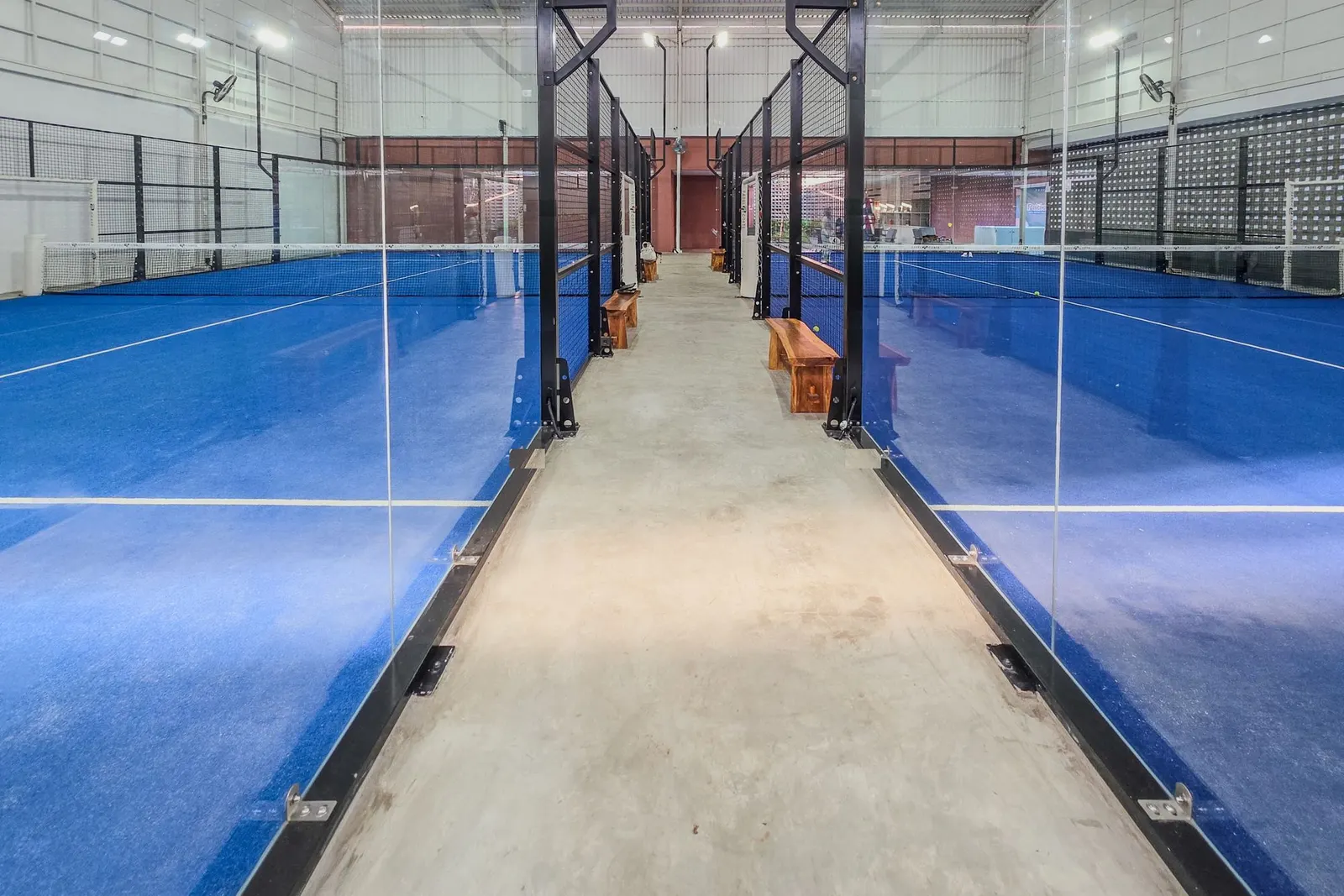
A standard doubles padel playing area measures 20 metres by 10 metres. A net divides it into two halves, and service boxes mark the target for the opening shot. The surrounding enclosure keeps the ball in play in ways that will feel unusual if you are used to tennis. Before the session, take a moment to identify the glass, mesh, doors and safe places to stand.
During a normal rally, a ball that lands in the opponent's court can then rebound from their enclosure and remain in play. It must be returned before it bounces on the ground for a second time. A shot that strikes the opponent's wall or fence before landing on their court is out. These two ideas explain a large part of the game.
Your own glass can help return a difficult ball, but the details are worth learning with a coach. Do not assume a rebound off any surface is permitted. In particular, the fence is not a substitute for your back glass. Start with predictable feeds and gentle rallies so you can learn where the rebound goes without chasing blindly towards the enclosure.

LEARN A RELIABLE UNDERARM SERVE
The padel serve starts behind the service line. Bounce the ball, then strike it at or below waist height into the diagonally opposite service box. Keep to the serving-position rules and do not run or jump into the shot. You normally have two attempts. A modest serve that lands in the correct box is far more useful at the start than a fast one that repeatedly misses.
There is an important enclosure rule on the serve. After bouncing in the correct service box, the ball can touch the glass, but touching the metal fence before a second bounce makes it a fault. A serve that clips the net has its own let conditions. Ask the coach to demonstrate these situations rather than trying to settle them from memory during a close point.
Practise a small routine: choose the target, breathe, bounce and swing. Avoid standing so close to the centre line that your body position becomes uncertain. For the first few games, agree that everyone can stop and ask about a rule. A shared understanding is better than carrying an argument into every service game.
KEEP SCORING SIMPLE AND AGREE THE FORMAT
Padel commonly uses familiar tennis-style scoring: love, fifteen, thirty, forty and game. Sets are often played to six games with a two-game margin, with a tie-break at six-all. However, social sessions and competitions can use different match lengths or deciding-point systems. Do not assume the format. Confirm it with the organiser before the first point.
When you are learning, a timed session can be less stressful than trying to finish a full match before the booking ends. Leave a few minutes for a warm-up and stop early enough to clear the court for the next group. If you are practising rather than competing, scoring a few short games is enough to learn service order and court positions.
Call the score before each serve, make line calls promptly and repeat the agreed service order if anyone is unsure. Keep the conversation friendly. You are building a group you may want to play with again. A disputed social point is rarely worth spoiling an evening, and clear habits now will make later competition easier.
BORROW FIRST, THEN BUY WITH A REASON
Many venues offer racket hire or include equipment in a beginner session. Check before arriving and ask whether balls are supplied. A padel racket has a solid perforated face rather than tennis strings. For an early purchase, comfort and ease of handling matter more than a professional player's endorsement. Borrow different options if the club allows it and avoid choosing by appearance alone.
Wear footwear suited to court movement and the venue's surface. Padel involves lateral steps, stops and changes of direction, so ordinary running shoes may not be the best choice. Ask the operator or a qualified coach what they recommend for that court. There is no single shoe or racket that makes every player safer or better.
Use the racket's safety wrist strap as instructed and check it before play. Bring water and clothing suitable for the weather. If you have an injury, disability or health concern, discuss appropriate participation with a qualified professional and the session organiser. An inclusive club should be willing to explain access and adaptations without making promises it cannot support.
PLAY WITH YOUR PARTNER, NOT AROUND THEM
The quickest tactical improvement is often communication. Agree who will call for a ball through the middle, tell your partner when you are moving back and acknowledge a good decision even when the shot misses. You do not need to comment on every point. Short, useful calls are better than a running technical lesson from the other side of the court.
Try to move as a pair rather than leaving one player near the net and the other at the back for long periods. Your coach can explain when to advance and when to retreat. At beginner level, returning one more ball with control usually teaches more than attempting a winner from an awkward position. Give yourself a margin above the net and inside the lines.
Learn the lob early. A well-judged high ball can buy time and change the court position, but practise it in a controlled setting before relying on it under pressure. Do not copy advanced overhead shots from a short video without understanding the movement. Good foundations are less dramatic to watch but easier to repeat.

PLAN FOR BRITISH WEATHER AND REAL COSTS
Outdoor padel means checking conditions, not just the forecast. Rain, standing water, frost, glare and wind can affect a session. Follow the operator's decision about whether a court is playable. A paid booking does not make an unsafe surface suitable. Covered courts can offer more predictable play, although an open-sided canopy does not remove every effect of weather.
Read the cancellation and weather-credit policy before booking. Ask when a cancellation decision is made, who receives a refund and how shared payments are handled. If four people split the cost, agree whether one person books and collects contributions or whether the venue supports individual payments. Small practical arrangements prevent awkward conversations later.
Build a budget around the full outing: court share, coaching, equipment hire, travel and any membership charge. Compare membership with realistic use rather than an ambitious plan to play every day. A flexible pay-and-play start can be sensible while you learn which sessions and partners work. We do not quote a universal UK price because venue arrangements differ.
MAKE YOUR FIRST MONTH REPEATABLE
For week one, book an introduction and learn how to serve, return and move safely. For week two, repeat a beginner session and concentrate on one simple task, such as making a controlled return. In week three, try a suitable social game. In week four, decide whether a small coaching block or a regular booking would help. This is a flexible example, not a training prescription.
Keep a short note after each session: one thing that felt easier, one question and one next step. Avoid measuring progress only by who won. A longer rally, clearer communication or better confidence around the glass can be meaningful progress. Rest and recovery are part of a sustainable routine, especially if you are returning to sport.
If the group feels too competitive or too advanced, try another session before deciding the sport is not for you. Coaching style and social atmosphere vary. Tell the organiser what you need: a slower introduction, help finding partners, an accessible session or a time that fits work. Specific questions make it easier to find the right setting.
KNOW WHERE TO TAKE THE NEXT QUESTION
The LTA Padel beginner guidance is a useful authoritative starting point for equipment, basic rules and finding a court. Use it alongside hands-on instruction, not instead of it. Check current competition regulations with the organiser if you move beyond social play. Rules summaries on independent websites cannot cover every unusual situation or every event format.
Padel Clubs UK brings playing, court projects and property questions into one place. We are an independent information and enquiry website, not the operator of every court we discuss. An enquiry is a way to explain what you are looking for; it is not a confirmed booking, professional appointment or guarantee of availability.
Tell us your area, whether you have played before, when you can visit and what would make a club suitable. If your interest is a home near a club or a future court project, say that too. The most useful next step is one that fits your circumstances. Start with one good session, keep asking clear questions and build from there.
Source
This article draws on LTA Padel guidance on getting started. Check the original for the latest figures before making decisions.
Next, explore homes near padel clubs or ask about beginner sessions.
Ready to ask a question?
One short form. A real person reads it and replies with useful next steps, whether you want a coach, a court or a home near one.
Enquire Now