PADEL PROPERTY: FINDING A UK HOME NEAR THE GAME
Explore UK homes with courts, shared sports facilities and access to padel clubs, with practical checks on ownership, running costs and planning.
10 MIN READ · Padel Clubs UK editorial
Related reading: property introductions and padel court planning. For official guidance see the LTA padel hub.
BUY THE LIFESTYLE YOU WILL USE
Padel property can mean several different things: a home with a private court, a property on an estate with shared facilities, or an ordinary home close to an excellent club. These are not interchangeable purchases. Each creates a different relationship between ownership, access, cost and responsibility. Start with how you want to play, then decide what type of property could support it.
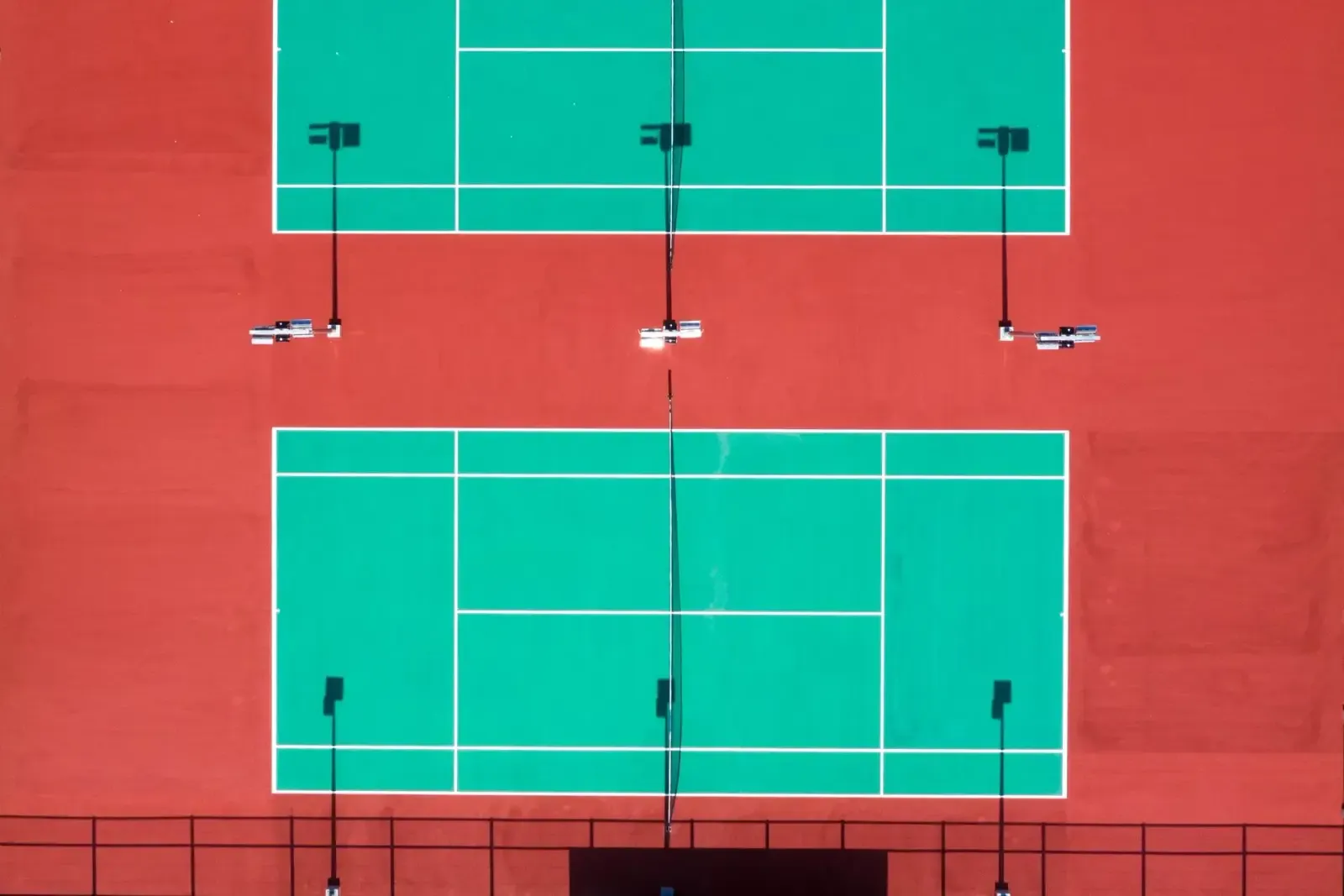
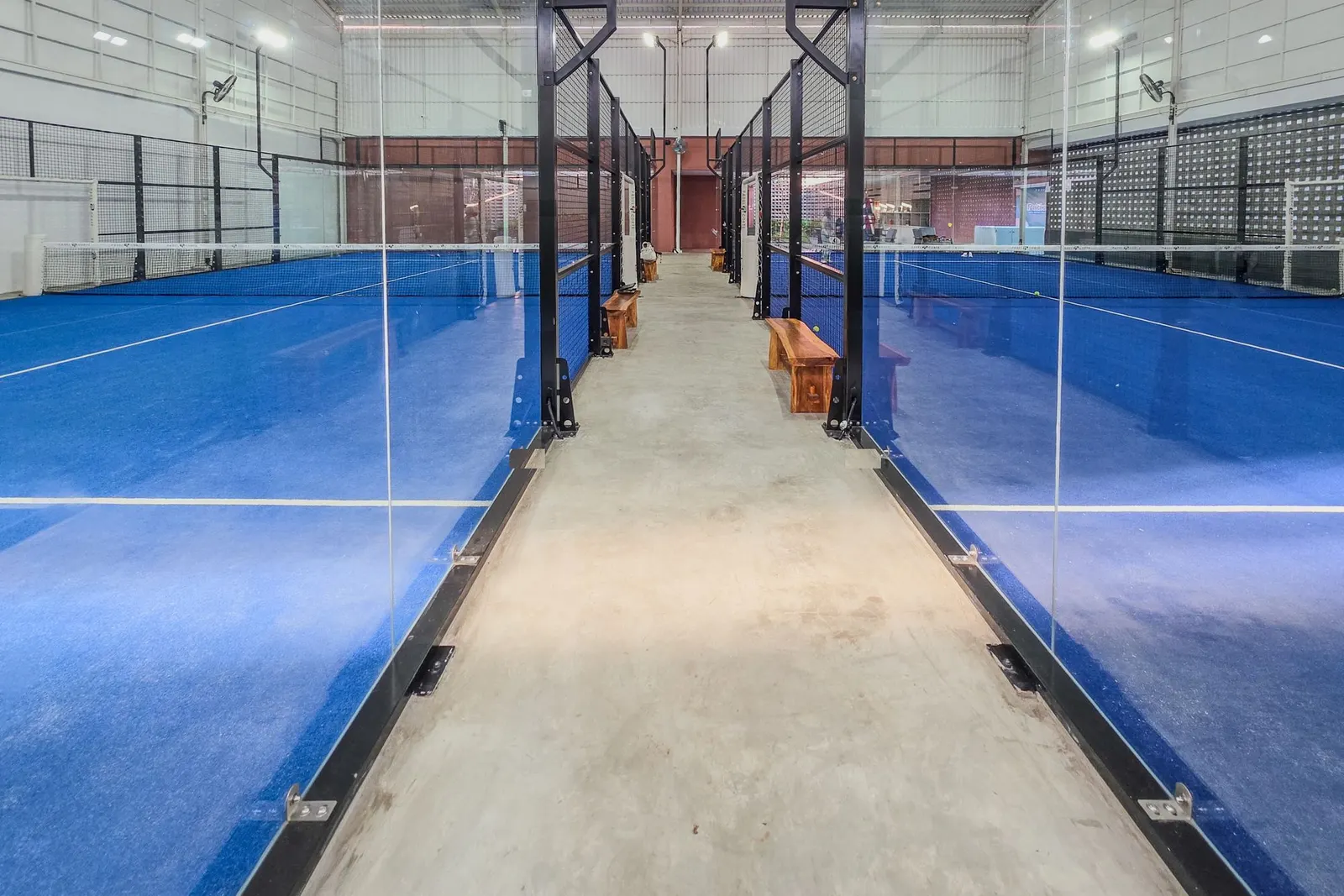
A photograph of a bright blue court is an invitation to investigate, not proof of a good purchase. The court may be tennis rather than padel. It may be shared, separately owned, restricted to particular hours or no longer operational. Access can depend on membership rather than the property title. Establish what is actually being offered before paying for detailed reports.
This is general guidance for buyers, not financial, valuation, tax or legal advice. Property law and transaction processes differ across the UK. Appoint independent professionals for the property and jurisdiction concerned. We do not promise a price premium, rental income or investment return from sporting facilities. A better-informed lifestyle decision is a sensible aim in its own right.
COMPARE THREE WAYS TO LIVE CLOSE TO PADEL
A private court offers control over your diary and the convenience of playing at home. In return, you take responsibility for maintenance, insurance, inspections and the conditions attached to its use. You still need playing partners. If you enjoy the social life of a club, a private facility may complement that experience rather than replace it.
A shared estate court can spread maintenance responsibilities, but access rules matter. Find out who can book, how peak times are allocated and whether guests or short-term tenants can play. Ask whether the management company can change the rules or charges. A facility described as communal should be supported by documents explaining exactly who has a right to use it.
A nearby club avoids direct court ownership, although it brings membership, booking and travel questions. Check the route at the times you would really play. A club five minutes away on a map can be less practical if the journey involves a congested road or unsuitable walk. Compare everyday access, not just the straight-line distance in a listing.
VERIFY WHAT THE PROPERTY DOCUMENTS INCLUDE
Ask your solicitor to establish the legal position of any court and related access. Is the playing area within the property boundary? Is it included in the sale, held under a separate title or used through an agreement? Are there rights over a drive, path or service route? The answer should come from the documents and enquiries, not only from a brochure.
For a shared facility, examine the lease, transfer, estate rules and management arrangements as relevant. Ask who maintains the court, who pays for major work and whether access can be suspended. Confirm whether the rights pass automatically to a new owner. A friendly arrangement between existing neighbours may not provide the security you expect after completion.
Request copies of relevant consents and conditions for existing courts, lights, enclosures or buildings. Ask your adviser whether the current use is consistent with those documents. A seller's statement that a court has always been there is not the same as legal confirmation. Investigate questions while you still have a choice about proceeding.
LOOK AT THE COURT AS A STRUCTURE
A normal home survey may not provide the specialist assessment needed for a padel court. Ask the surveyor what is covered and whether a separate inspection is appropriate. Glass, steelwork, foundations, drainage, lighting and the playing surface all have roles. Visible neatness does not establish structural condition, remaining service life or the quality of work below ground.
Seek the original design, installation information, warranties and maintenance records where available. Check who supplied the system and who can service it locally. An attractive enclosure with unclear foundations or missing paperwork deserves further investigation, not an automatic assumption that it is unsafe or sound. A qualified specialist can identify the questions and recommend proportionate follow-up.
Drainage matters in daily use. Ask about standing water, historic flooding and any recurring problems after heavy rain. Inspect access routes as well as the playing area. Trees, roots, debris and nearby slopes can affect maintenance. A viewing on a dry day cannot tell you everything about winter conditions, so request evidence and consider a second visit.
UNDERSTAND SHARED OWNERSHIP AND SERVICE CHARGES
For a home with communal facilities, read the financial arrangements alongside the access rights. Find out how the sports budget is set, whether reserve funds exist and whether substantial works are expected. Ask for recent service-charge information, relevant accounts and planned maintenance. A modest current charge is not necessarily good value if major replacement costs have been postponed.
GOV.UK explains that a leasehold property is owned for a fixed period under a legal agreement with the landlord. That agreement is central to understanding rights and responsibilities. The government's guidance is a useful starting point, but it cannot interpret a particular lease for you. Ask your solicitor to explain the remaining term, charges, restrictions and specific facility arrangements.
Shared sports facilities can be managed in other ways too, including arrangements linked to freehold estates. Do not assume that freehold means no communal obligations or charges. Ask what decisions owners can influence, how disputes are handled and how costs are allocated. A clear explanation should let you model ownership without relying on optimistic assurances.
TEST CLUB ACCESS BEFORE CHOOSING A NEIGHBOURHOOD
If your plan depends on a local padel club, book a session there before committing to the area. Ask about membership availability, beginner introductions, social groups and the booking window. Look at the timetable rather than the facilities list alone. The right neighbourhood should work with your actual life, including work, school and other regular journeys.
Try the route in both directions at a realistic time. Think about winter evenings, parking pressure and public transport after your usual session ends. If you would walk or cycle, inspect the route's continuity and lighting. These practical details may matter more to your weekly routine than being in the same postcode as the club.
Avoid treating a nearby venue as a permanent feature guaranteed by the property purchase. Operators, prices and facilities can change. Your solicitor can advise where a property transaction genuinely includes a documented right; otherwise, proximity is simply a location advantage to assess. Choose a home that still works if the sporting offer changes.

DO NOT ASSUME A TENNIS COURT CAN BECOME PADEL
An existing tennis court may appear to provide a convenient starting point, but converting it to padel needs proper investigation. The playing systems differ, and the padel enclosure imposes structural requirements. Existing surfacing or foundations may not be suitable. A qualified engineer and competent court specialist should assess the site before a budget or layout is treated as reliable.
Planning consent is a separate issue. Existing recreational use does not automatically permit every new enclosure, lighting system, canopy or operating pattern. The LTA's construction guidance states that formal planning consent is required for padel court construction. Ask the local authority or an adviser how your proposal should be handled and which documents would be needed.
Noise, neighbours, drainage, trees and access can all influence whether the idea is feasible. Do not buy a property on the assumption that a future padel project will be approved. If the court is essential to the purchase, discuss that dependence with your professional advisers early. They can explain how uncertainty should affect your decisions.
COST OWNERSHIP WITHOUT INVENTING A PRICE PREMIUM
A court can add to a home's appeal for some buyers, but it can also narrow the audience or create a future liability. There is no universal percentage uplift that applies to every padel property. Location, condition, land, house quality and the local market remain important. Ask a qualified valuer to assess relevant evidence rather than relying on a general lifestyle claim.
Prepare an annual ownership budget and a longer-term replacement allowance. Include specialist maintenance, cleaning, lighting energy, inspection, insurance and any access or communal costs that apply. Ask which components are likely to need attention first and how repair costs are estimated. A private court is not free to operate simply because there is no booking charge.
If rental use is part of your thinking, check permissions, insurance, management arrangements and local rules with appropriate advisers. Confirm whether tenants can use the court and under what conditions. Do not assume a sporting facility guarantees occupancy or a higher rent. Any financial projection needs clear assumptions, evidence and a realistic allowance for costs and vacancy.
LOOK BEYOND THE COURT TO THE HOME
It is easy for a distinctive feature to dominate a viewing. Keep a separate list for the fundamentals: the home's condition, layout, energy use, accessibility, transport and surrounding environment. A wonderful court does not resolve a leaking roof, an unsuitable commute or a household budget stretched beyond comfort. Consider the needs of everyone who will live there, including non-players.
Outdoor space has competing uses. Ask whether the court reduces privacy, garden flexibility or room for other activities. Consider the relationship between the playing area and bedrooms, terraces and neighbouring homes. Visit at different times if possible. A sporting lifestyle should feel convenient for the household rather than turning every evening into a compromise.
Think about resale without trying to predict it precisely. Good records, lawful use, clear access rights and sound maintenance can make a facility easier for a future buyer to understand. Keep invoices and professional reports, and avoid unauthorised changes. The strongest long-term approach is often to buy a good home with a well-understood sporting benefit, not a promise.

WRITE A BRIEF THAT MAKES THE SEARCH CLEARER
Describe your intended way of playing before you describe the dream photograph. Say whether you want private ownership, shared use or proximity to a club. Add your area, budget range, timing, household needs and tolerance for maintenance. Mark essentials clearly. A search with five honest priorities is more useful than a broad request for any home with a court.
Padel Clubs UK draws on the international property background of its associated business, Spot Blue International Property Limited, established in 2003. That experience shapes the questions we encourage buyers to ask, but it does not replace independent legal, survey, planning or financial advice. We do not imply that every photograph is an available property or that an enquiry reserves anything.
Use the government leasehold guidance and other relevant primary sources to prepare, then take property-specific questions to your advisers. If you would like to discuss your sporting-home plans, send a considered enquiry explaining what matters most. The goal is a home where the game fits naturally into life, with the ownership position and ongoing responsibilities understood before you buy.
Source
This article draws on GOV.UK guidance on leasehold property. Check the original for the latest figures before making decisions.
Next, explore learning padel in the UK or enquire about homes near courts.
Ready to ask a question?
One short form. A real person reads it and replies with useful next steps, whether you want a coach, a court or a home near one.
Enquire Now